

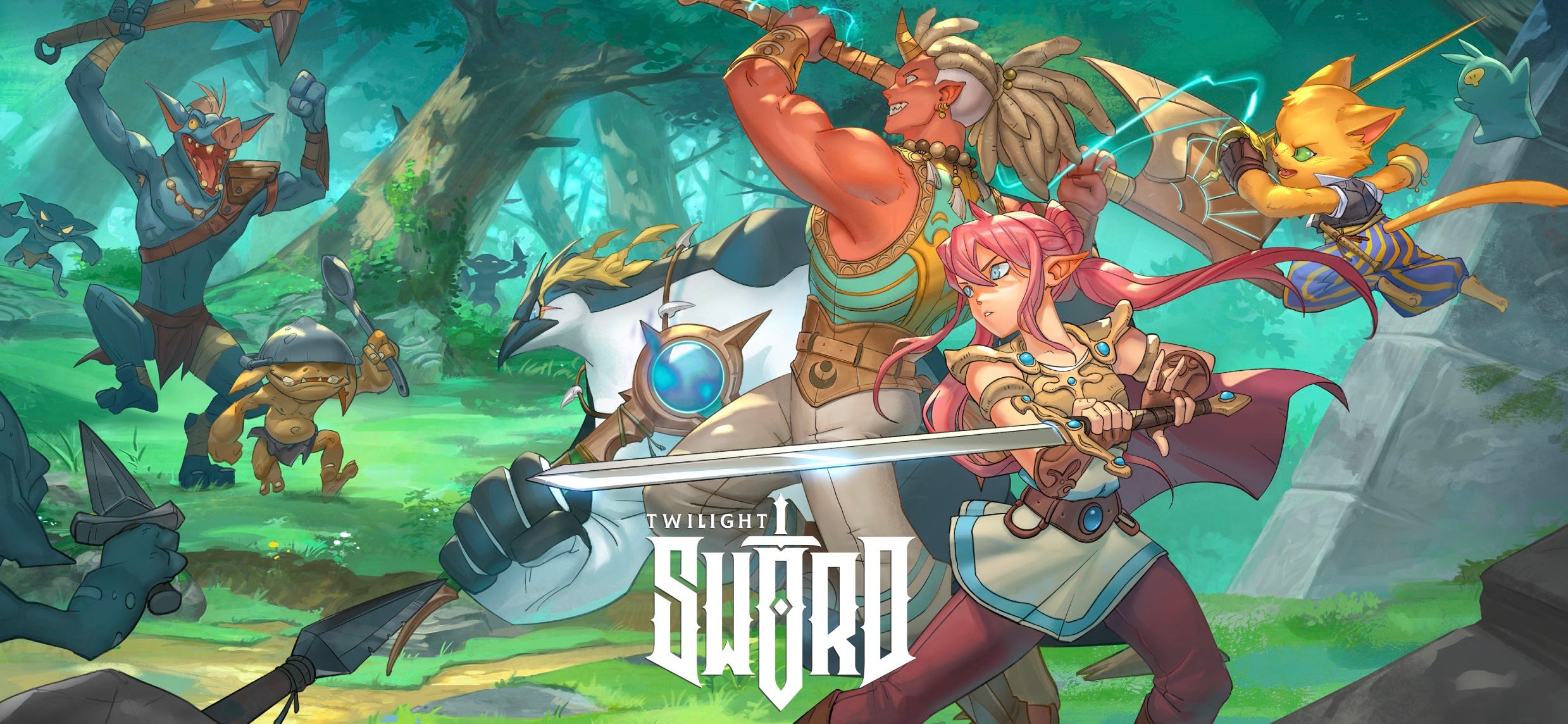
I recently received the PDF for Twilight Sword by Two Little Mice, and even before getting the physical book, it already has my attention.
This started as a Kickstarter project, and the physical version should ship later this summer. So this is not my full review yet. Think of it more as a first look at what stood out to me while reading through the digital version: the bright JRPG-inspired art direction, the roll-under d12 system, the clean monster design, and how naturally solo-friendly the game already feels.
Once I receive the physical book, I want to come back with a deeper review. For now, though, I wanted to write down why Twilight Sword feels like one of those games I am genuinely excited to bring to the table.
A Bright Fantasy World That Feels Easy to Approach
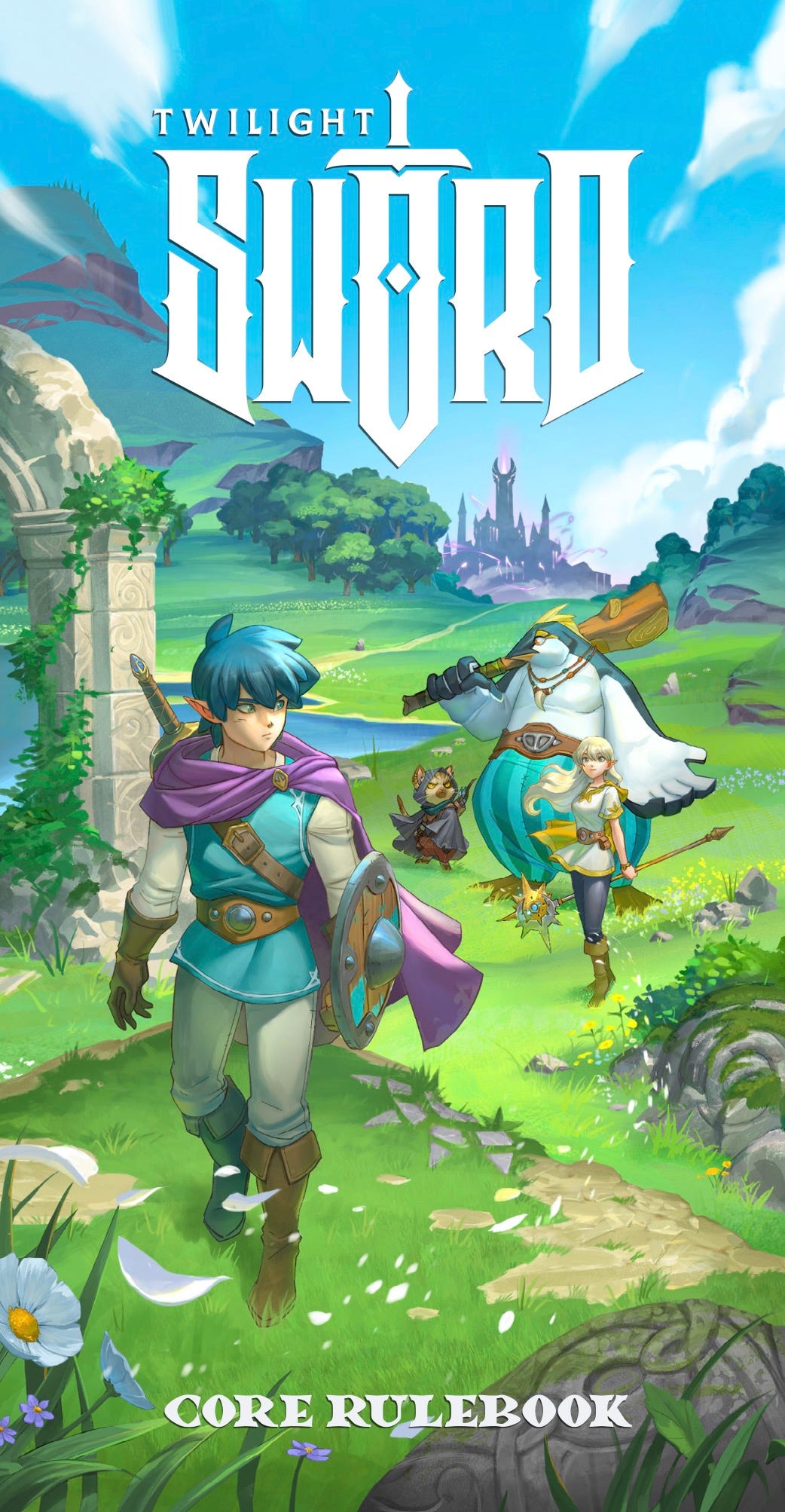
The first thing that caught me is the overall presentation. Twilight Sword immediately gives me a mix of Legend of Zelda, Final Fantasy, and Studio Ghibli energy. There is a strong Japanese RPG and anime influence in the visual direction, and I mean that as a compliment.
A lot of fantasy RPGs lean dark, grim, or graphic. I enjoy those games too, but they are not always the easiest books to share with younger players or family members. Twilight Sword feels different. The art direction looks colorful, readable, and adventurous without losing that sense of fantasy danger.
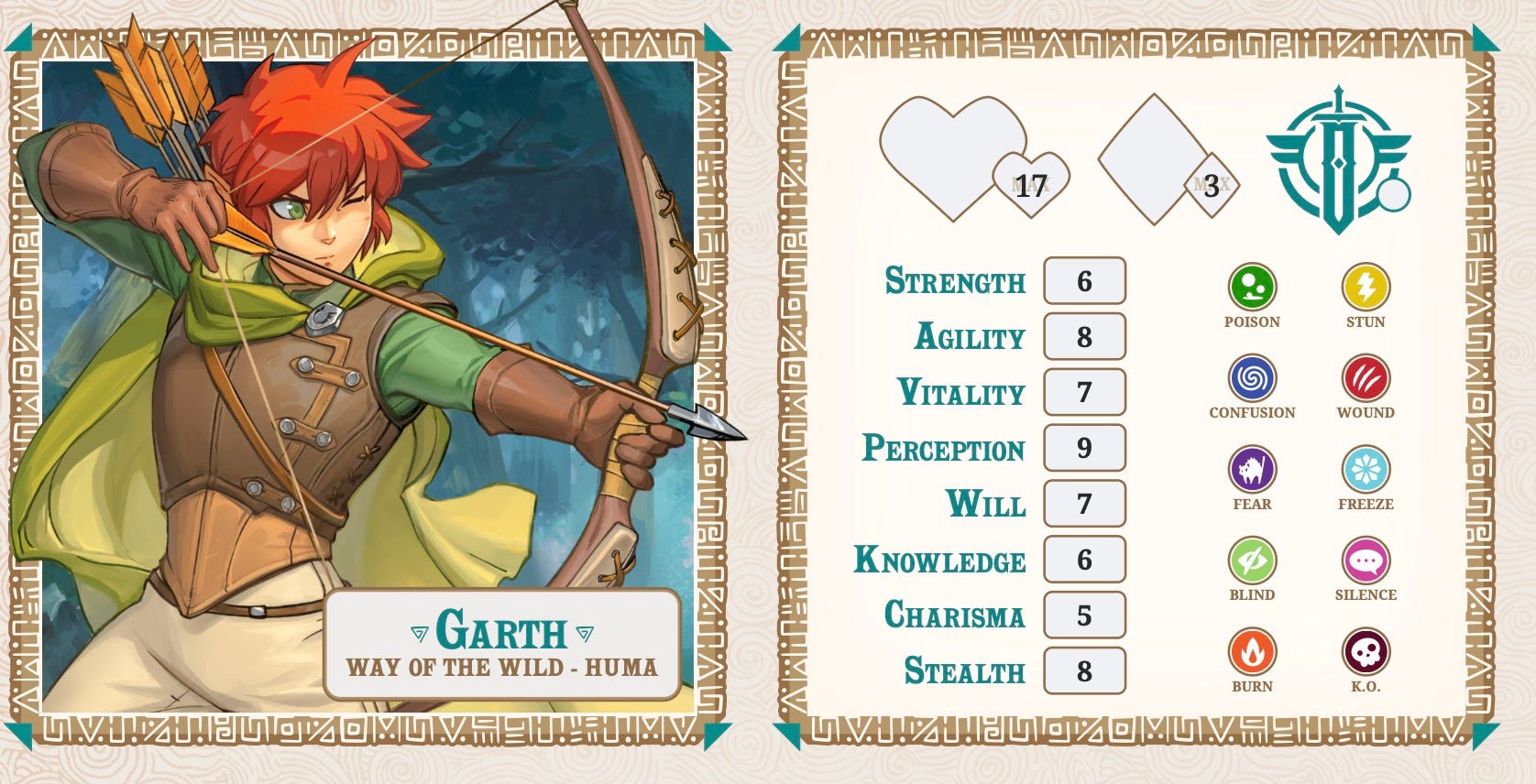
I would still want to read the entire book before calling it a children’s RPG, but visually it feels much easier to put in front of older kids than many darker fantasy games. If you have a younger player who loves Zelda or JRPGs, this is the kind of book that might immediately make them curious.
Character creation also seems approachable from what I have read so far. The species are fun, with options that feel more playful than the usual fantasy lineup. I especially like seeing things like penguin-like and cat-like people in the mix. It gives the game a clear identity right away.
Rolling Under Instead of Rolling High
Mechanically, the biggest shift is the core resolution system. Twilight Sword uses the full dice chain for different tasks and damage, but the d12 seems to be the die you will use most often for checks.
Instead of rolling high against a DC, you usually roll under one of your own stats.
Coming from Dungeons & Dragons, this immediately flips a familiar instinct on its head. In D&D, you usually want to roll high, and a natural 1 is the worst thing that can happen. In Twilight Sword, rolling a 1 is a critical success.
That sounds strange at first, but it makes a lot of sense once you think about how the roll works.
For example, if your character has Strength 9 and you make a melee attack, you want to roll 9 or lower on the d12. You are not waiting for the GM to compare your attack roll against a monster’s armor class. You are rolling against your own ability to perform the action.
I really like that design choice. It puts the focus on your character sheet and on what your character is good at. It also removes a small but constant back-and-forth that happens in many games: “Does that hit?” Here, you often know the answer immediately.
That should make play faster, especially in combat.
Inventory Without the Headache
Another small system I really appreciate is the inventory.
Instead of tracking exact weight, Twilight Sword uses slots. Big items take more slots. Smaller items can stack together. Currency does not take meaningful space. If you go over your limit, you take a penalty.
That is the kind of inventory system I usually prefer. It is still concrete enough that equipment choices matter, but it does not ask you to do accounting every time you pick up a rope or a few arrows.
I also like that inventory capacity is tied to Strength. That makes Strength useful beyond melee attacks. If you want to carry more gear, heavier equipment, or simply be the person who can haul the useful stuff, that stat matters in a very practical way.
It is a small touch, but it makes the character sheet feel more connected.
Damage Types That Could Actually Matter
Twilight Sword also seems to put a lot of emphasis on damage types.
You have types like water, ice, fire, earth, lightning, thunder, poison, light, and darkness. These are used across attacks, spells, and monsters.
What I find interesting is how clear the interaction is:
- Immunity means the creature takes no damage from that type.
- Resistance means the creature takes half damage.
- Vulnerability means the creature takes double damage.
D&D has resistance, immunity, and vulnerability too, but at many tables, vulnerability especially does not come up as often as it could. It can be hard to build strategy around damage types when they are not always front and center.
Twilight Sword looks like it wants those choices to matter more often. If that is true in play, it could create a nice tactical layer without making the rules feel too heavy.
Choosing the right spell, weapon, or elemental effect becomes more than flavour. It becomes part of the puzzle.
Monster Turns That Look Built for Speed
The monster stat blocks are another thing that stood out to me.
They look easy to read at a glance, which is already a big win. But the part I find especially interesting is how monster turns work. A monster can have a value that shows how many turns it takes in a round, and those turns do not all happen at once. Each turn can sit at a different initiative value.
That means a dangerous monster can act multiple times in a round without simply taking three turns back-to-back and overwhelming the table all at once. It spreads the creature’s presence across the round, which sounds much more dynamic.
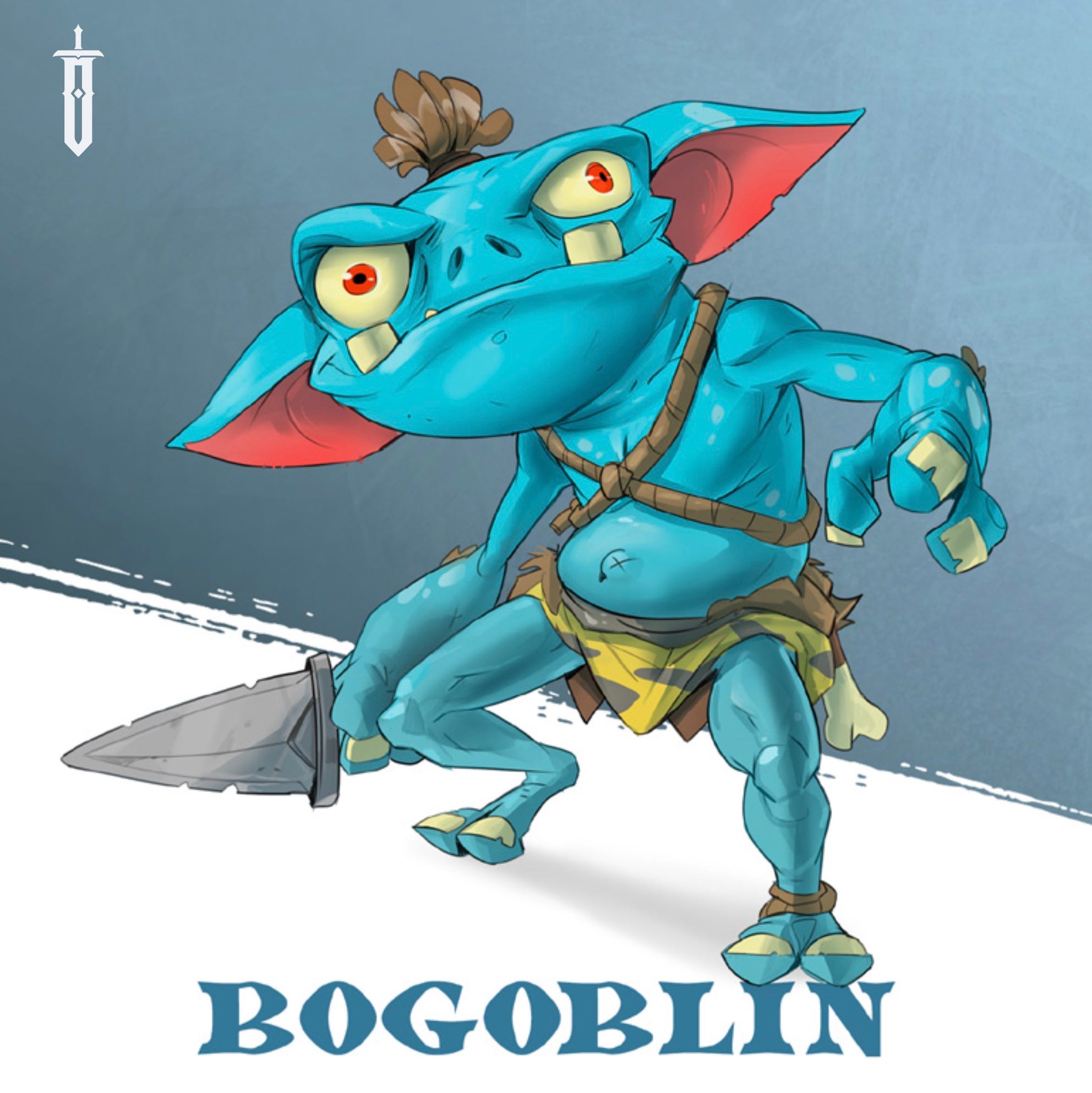
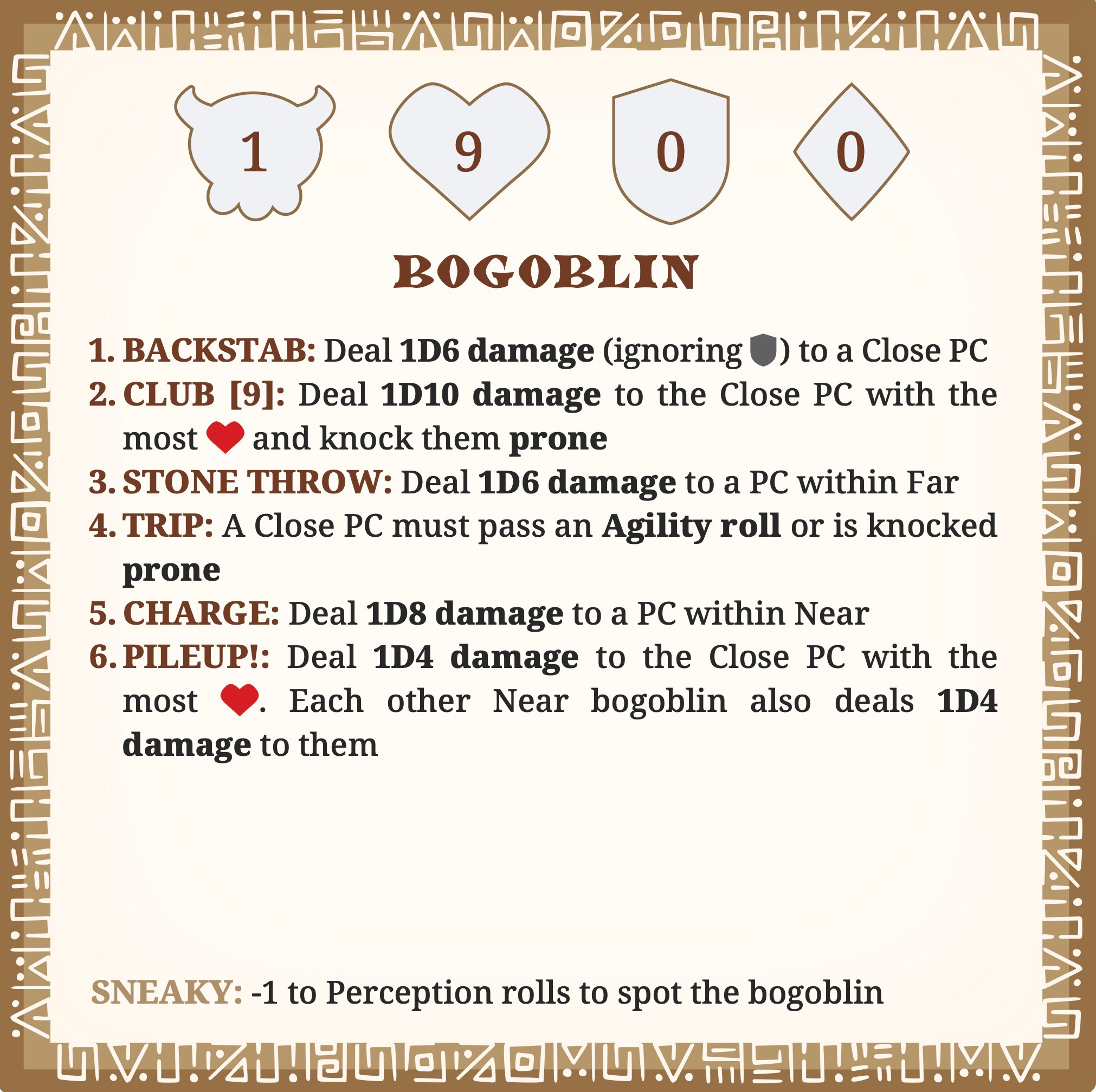
Defenses are also straightforward. Armor or defense subtracts from incoming damage before the rest goes to hit points. That is easy to understand, easy to apply, and quick to resolve.
But the biggest speed improvement might be this: monsters do not roll to hit.
When a monster action happens, it happens. That makes monsters scarier by default, but it also removes a lot of rolling from the GM side of the table. Combined with player-facing roll-under checks, I can see combat moving much faster than in a traditional D&D-style fight.
And honestly, that matters. Combat slog is one of the easiest ways for a game session to lose energy.
Why This Already Feels Solo-Friendly
This is the part that excites me the most for Solo RPG Studio.
Each monster has a list of actions, usually around four to six options. When the monster acts, you roll the matching die. If it has four actions, roll a d4. If it has six, roll a d6. The result tells you what the monster does.
Even better, the actions spell out the target logic. The monster might attack the closest enemy, the farthest enemy, the character with the most hit points, or the one with the least hit points.
That is exactly the kind of procedure I love seeing in a game that might be played solo.
One of the hardest parts of solo RPG combat is deciding what the enemies should do without feeling like you are playing both sides too strategically. If you always choose the smartest monster action, you may punish yourself too much. If you go easy, the combat loses tension.
Randomized monster actions solve a lot of that. The creature behaves according to its own little system. You still get surprises, but you are not forced to constantly ask, “What would the GM do here?”
I have not read the dedicated solo rules yet, but even before seeing them, Twilight Sword already feels like it has the right ingredients for solo play.
PDF, Bundle, and Physical Book
Right now, I have access to the PDF, and I am waiting for the physical version. Once the physical book arrives, I want to do a more in-depth review after spending more time with the full rules and the solo material.
If you are curious about the game, the current bundle is probably the place I would look first.
Resources
Final Thoughts
Twilight Sword is not a game I have fully reviewed yet, but it is one I am already excited about.
The art direction is immediately appealing. The roll-under d12 system looks fast and easy to read at the table. The inventory rules seem simple without being meaningless. The damage types could add real tactical variety. And the monster action system feels like it could be excellent for solo play.
Most of all, it feels like a fantasy RPG that wants to move quickly while still giving you meaningful choices.
Once the physical book arrives, I want to come back with a deeper review after spending more time with the full rules and the solo material. For now, though, Twilight Sword is very high on my list of games I want to bring to the table.
Cheers!